

Review · INDIA SHORE EXCURSIONS
Goa Shore excursions : All inclusive Small Group tour
Goa’s story is told in churches, temples, and spice gardens. This six-hour port excursion brings those pieces together in an air-conditioned vehicle, with an English-speaking guide, lunch, entrances, and port pickup and return included. I like the mix of Portuguese and Hindu heritage, and I like the chance to see how Goa’s spices are grown rather than simply buying a packet in a shop. The main caution is time: long drives can leave the sightseeing rushed.
I also like the practical setup for a cruise day. At $54 per person, the tour covers transport, guide service, admissions, lunch, and a bottle of water, so you are not building the day one expense at a time. Still, the route is ambitious for six hours, and recent changes have left some people with very little time at Panjim or Old Goa.
Key points before you book
- Old Goa begins with St. Cajetan and Bom Jesus: The churches offer some of the clearest reminders of Portuguese rule and Jesuit influence in Goa.
- The Shanta Durga Temple adds a very different view: Its pagoda-like form and silver-coated doors show how distinct Goan Hindu architecture can be.
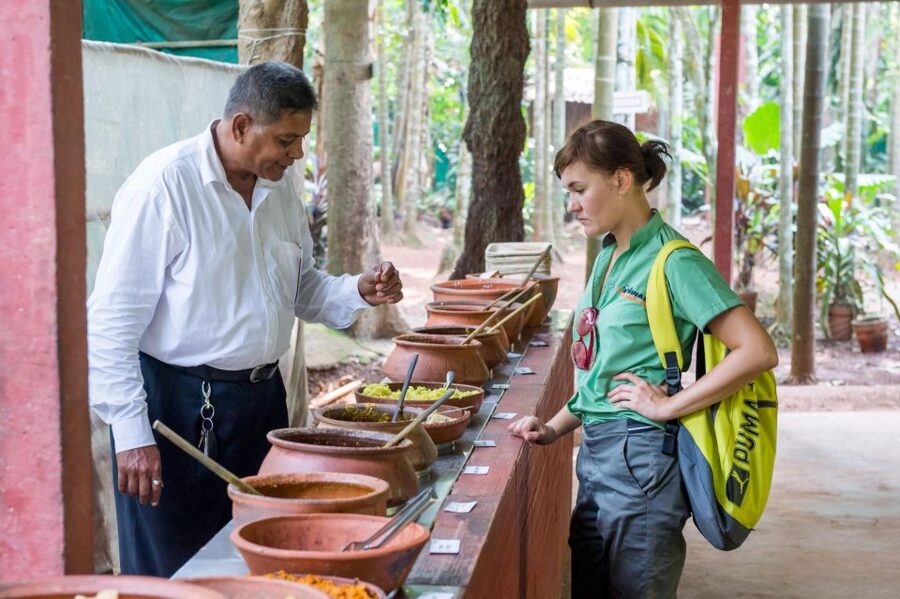
- The spice plantation is more than a quick garden stop: You see organic spice growing, fruit trees, herbal drinks, a traditional welcome, and a plantation meal.
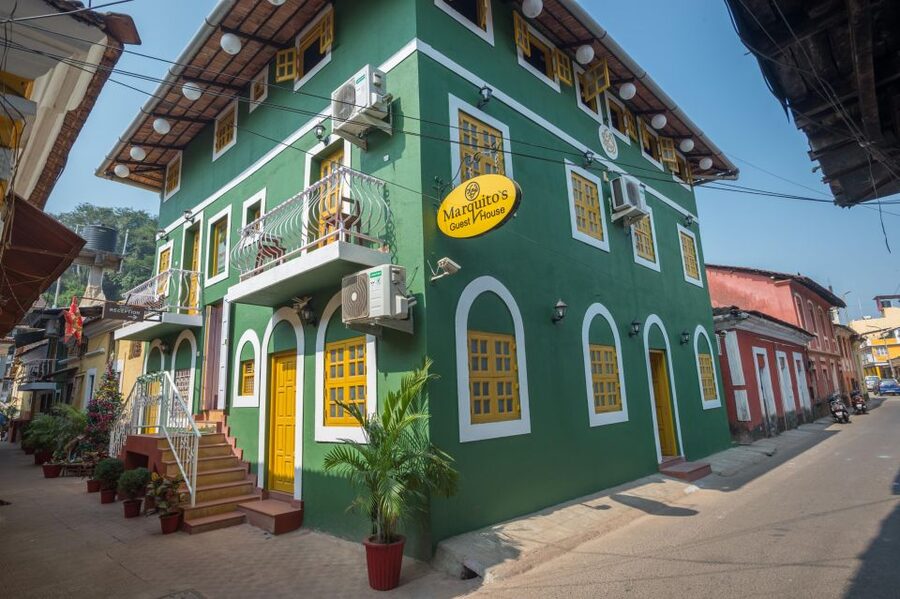
- Fontainhas is best treated as a short walking taste: The Latin Quarter has old villas and Portuguese character, but traffic and delays may shrink this part of the visit.
- The road time matters: The drive to the Old Goa area can take about 60 minutes, leaving less room for lingering at each stop.
- Dress and footwear affect your day: Cover shoulders and knees for religious sites, and wear flat shoes for the walking portions.
What the $54 shore excursion really includes
At $54, this is a reasonably priced way to see several parts of Goa without arranging separate transport from the port. You receive port pickup and return, an air-conditioned vehicle, a registered English-speaking guide, entrance fees, lunch, and one bottle of mineral water. That bundle matters in Goa, where the sites are spread out and a taxi hired for each stop would add both cost and planning.
The value depends on how much of the itinerary actually fits into the six-hour window. This is not a relaxed day with long visits at every landmark. It is a broad introduction, and you should expect road time between the port, Old Goa, the temple, the plantation, and Panjim.
The advertised format is a small-group tour, but no exact group size is given. That means the pace may depend on the people sharing your vehicle and on traffic. One recent vehicle was described as old, with worn seats and broken seat backs, so vehicle quality may not always match the phrase luxury vehicle in the inclusions.
The tour offers free cancellation up to 24 hours before departure and reserve-now, pay-later booking. Those terms are useful for a cruise itinerary, where port schedules and shore plans can change. The activity is not suitable for wheelchair users or people over 95.
More Small Group Shore Excursions in India:
- Mumbai Shore Excursions: Small Group Mumbai Sightseeing tour
★ 4.8 · 6 reviews - Ephesus: Small Group Tour for Cruise Passengers
★ 4.8 · 1,100 reviews - Mykonos Small Group Tour for Cruise Passengers — Port Pickup
★ 5.0 · 597 reviews
The long road to Old Goa
The first major part of the day is the drive toward Old Goa. Plan on roughly 60 minutes to reach the Bom Jesus and Se Cathedral area, although the order of stops can change because of traffic or other problems on the road.
That drive is the central tradeoff of the tour. You cover a good part of the state, but every minute in traffic is a minute not spent inside a church, temple, or Latin Quarter lane. If your priority is a careful visit to Old Goa, a private car with a tighter plan may suit you better. If your priority is seeing several different sides of Goa in one port call, the drive is easier to accept.
Your guide is meant to explain the religious and architectural details as you go. Guide quality can shape the whole day. Some people have had a very informative guide who explained the places clearly, while one guide was described as a multilingual former chef who spoke English fairly well but spent too much time on political opinions. You should feel free to steer the conversation back to Goa, especially on a short shore excursion.
St. Cajetan Church and the Portuguese imprint
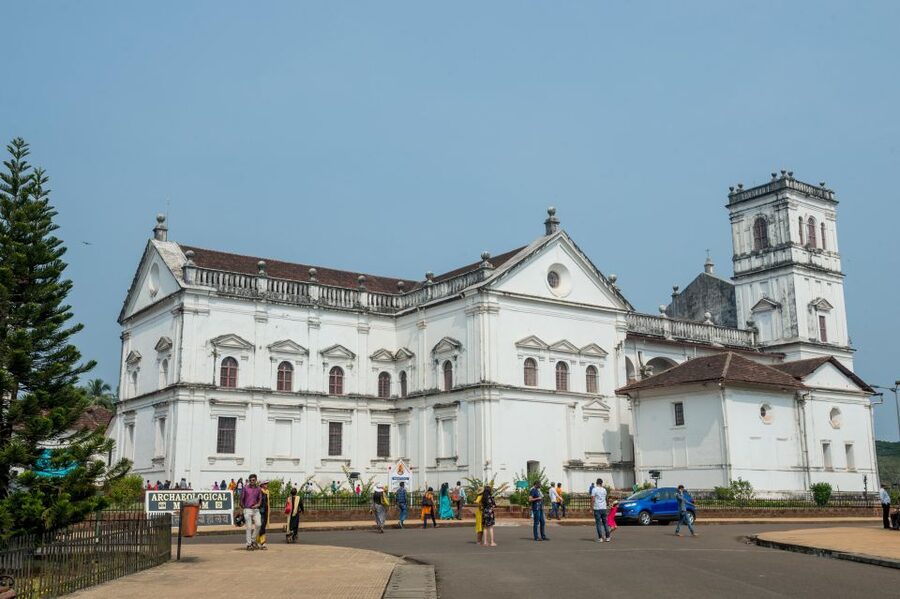
St. Cajetan Church is a strong first stop because its design makes the Portuguese connection easy to see. The church was modeled on St. Peter’s in Rome and built from laterite blocks covered with lime plaster.
Look at the front façade, where Corinthian columns and pilasters support a pediment. Two towers serve as belfries, and four niches hold statues of the apostles. These details are not just decoration. They show how European church design was adapted to local materials and a tropical setting.
There is also a crypt beneath the church. Portuguese governors were placed in lead coffins there before their embalmed bodies were sent back to Lisbon. The final group was removed in 1992, a small but striking detail that gives the building a more complicated past than its graceful exterior suggests.
You may not have much time to examine everything. Still, this is the kind of stop where a good explanation adds real value, since the most interesting features are easy to miss if you simply walk in, take a quick look, and leave.
Basilica of Bom Jesus and St. Francis Xavier
The Basilica of Bom Jesus was built by the Jesuits in the 16th century and is one of Goa’s key Christian sites. Its main draw is the marble mausoleum containing the embalmed body of St. Francis Xavier.
The body is displayed publicly only once every ten years. The last stated public display was in December 2014, so you should not expect to see the remains exposed during an ordinary visit. The mausoleum itself remains an important part of the church, and your guide can explain its place in Goa’s religious story.
Cameras and video cameras are not permitted inside the churches and cathedrals visited on this tour. Keep that rule in mind before you enter. You can still pay attention to the carved details, altar spaces, and the sense of age in the buildings without turning the visit into a photo stop.
One problem with the itinerary is that Old Goa can be missed if the schedule changes. A December 2024 outing reportedly spent too little time at the planned heritage sites, while another person said the churches were not seen at all. The tour operator can reverse or change the order, but you should ask early in the day if the church visits are still confirmed.
A few more shore excursions around India worth a look
- Kochi Sightseeing Tuk-Tuk Tour with Pickup From Cruise Ships
★ 5.0 · 194 reviews - Kochi Tuk-Tuk Sightseeing Tour with Cruise Ship Pickup
★ 5.0 · 190 reviews - Kochi Tuk-Tuk Private Tours with Pickup from Cruise Ships
★ 5.0 · 181 reviews - Kochi Tuk-Tuk Tour with Pickup From Cruise Ships
★ 5.0 · 155 reviews
Shanta Durga Temple brings a different Goa
The visit to Shanta Durga Temple gives the tour a useful change of pace. Built between 1713 and 1738, the temple is dedicated to Shanta Durga, the Goddess of Peace.
Its architecture does not look like the standard image many people have of an Indian temple. The structure has an almost pagoda-like form, with a roof made from long slabs of stone. The spacious setting and the design of Goan temples reflect local traditions that differ from the churches of Old Goa.
Inside the main entrance hall, decorated wooden doors are coated with silver. The entrance path also includes silver-covered doors. A guided visit helps you understand what you are seeing, after which you have some time to look around independently.
You need to dress respectfully here. Cover your shoulders and knees, and wear footwear that is easy to manage if the temple requires you to remove it. Conservative clothing is also expected at the churches, so dressing properly from the start is simpler than trying to adjust your outfit between stops.
The Tropical Spice Plantation experience
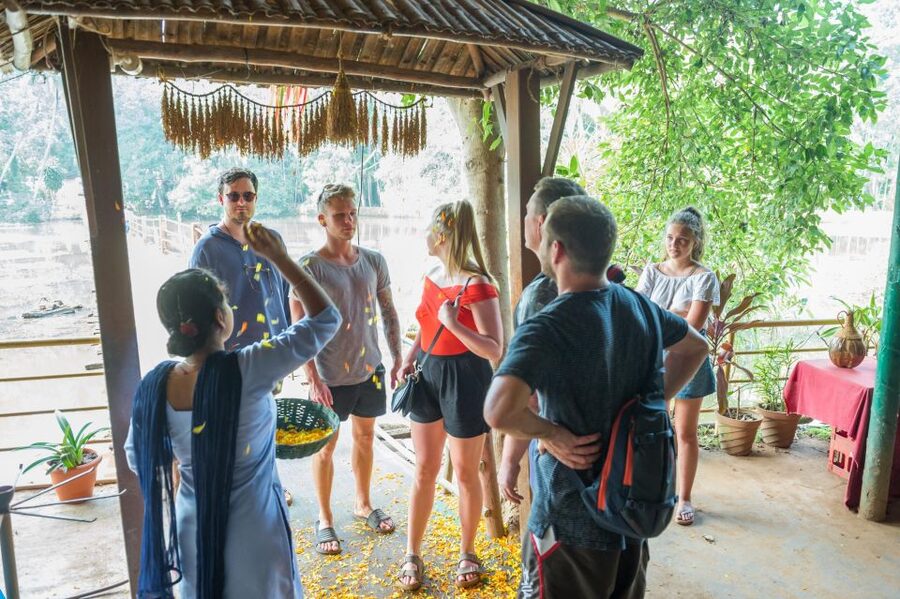
The spice plantation is the most sensory part of the day. You receive a traditional Goan welcome and a herbal drink before walking among plants that include nutmeg, cardamom, cinnamon, black and white pepper, coriander, chilies, and betel nut.
The plantation also grows fruit and food plants such as cashew, custard apple, banana, citrus, and pineapple. That combination helps you see the farm as a working mixed garden rather than a single-crop display.
A particularly unusual feature is the betel nut climbing demonstration. Pluckers climb trees more than 100 feet high and move from tree to tree. It is a memorable reminder that spices and tropical crops involve demanding physical work long after the seeds are planted.
Lunch is included at the plantation. That is convenient, but it also creates one of the itinerary’s biggest timing issues. One person found that too much time was spent at the plantation and on the meal, leaving only about 15 minutes for a later church and shopping stop. If you would prefer more heritage time, tell the guide early that the plantation meal should not run long.
The plantation is worth keeping in the schedule if you want something beyond architecture. If Old Goa is your main reason for booking, however, you may see the meal as time that should have gone to the churches.
Fontainhas and a quick look at Panjim

The final planned stop is Fontainhas, Panjim’s Latin Quarter. The area was built by the Portuguese, and the walk is meant to show old villas and the exterior of a church.
A drive through Panjim adds context. Streets lined with Portuguese-style villas show how that influence continued beyond the major churches of Old Goa. Fontainhas is the right place to look at smaller details, painted façades, balconies, and street scale rather than grand monuments.
The catch is that this portion can become extremely brief. One account described only 10 minutes in Panjim, while another had about 15 minutes for the church and shops after a fast walk. That is not enough for a leisurely neighborhood visit. If Fontainhas matters to you, ask how much time remains before the walking tour begins, and keep your expectations modest.
The vehicle then returns you to the pier. Build a little mental space into the day for traffic, since the tour promises port return but does not promise an unhurried final stop.
Guides, transport, and the pace of the day
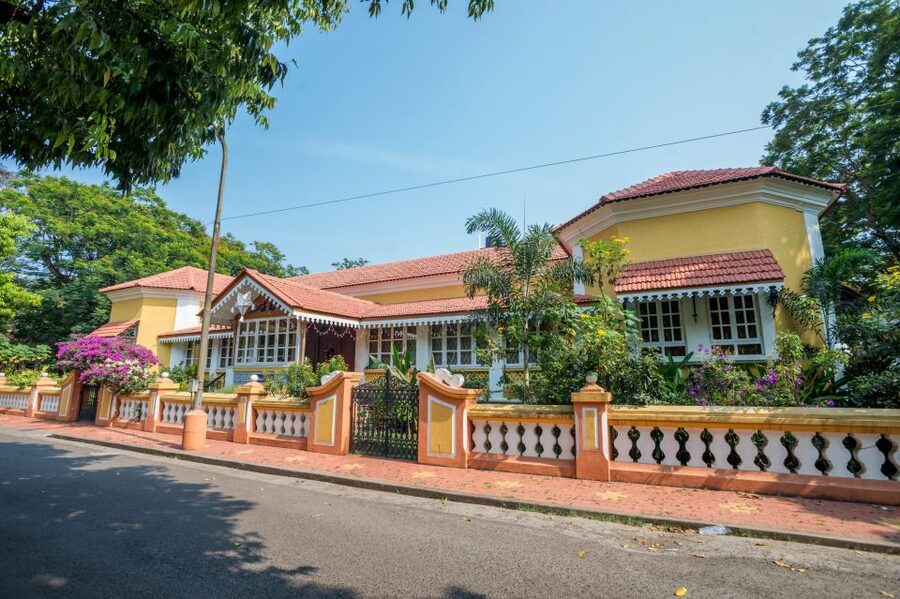
The strongest positive comments focus on the guide’s explanations and the number of sights covered. A well-informed guide can connect Portuguese rule, Jesuit churches, Hindu traditions, farming, and Panjim’s villas into one understandable story. That broad context is the main reason to choose an organized excursion rather than simply hiring a car.
The weaker experiences point to communication and pacing. You need the guide to explain clearly if a stop is being shortened or removed. A change may be necessary because of traffic or access, but you should be told why and given a chance to decide how to use the remaining time.
Restroom planning also deserves attention. Stops at restaurants, hotels, and the plantation may have facilities, but one guide reportedly told people to wait as long as two hours rather than use local facilities. You should ask directly at each stop and use a restroom when one is available. That is basic shore-day planning, not fussiness.
Tips are not included in the price. Tipping is optional and should reflect the service you receive. You should not feel pressured into paying, especially if the day has been poorly paced or the agreed itinerary was not explained.
Bring sunscreen, sunglasses, a hat, and flat comfortable footwear. Goa can make a short walk feel longer, and the route combines church floors, temple grounds, plantation paths, and a neighborhood walk. One bottle of water is supplied per person, but the activity information specifically confirms only that single bottle.
Who will get the most from this Goa tour?
I would choose this excursion if I had one port call and wanted a broad introduction to Goa. It gives you Christian heritage, Hindu architecture, agriculture, and a look at Panjim without the work of arranging multiple transfers.
It suits people who enjoy variety more than depth. You will see more places, but you may spend only a short time at some of them. The tour also suits passengers who value included lunch and transport and do not want to negotiate with drivers at the pier.
I would hesitate if your top priority is a long visit inside the Basilica of Bom Jesus, a proper walk through Fontainhas, or a quiet meal. I would also think twice if you need step-free access, since the tour is not suitable for wheelchair users.
A private taxi may be a better choice for a very specific plan, particularly if you want to focus only on Old Goa. But it will not automatically provide the same organized explanations, included entrances, or plantation meal.
Should you book the Goa shore excursion?
Book it if you want breadth, convenience, and a guide-led introduction for $54. The church and temple combination is worthwhile, and the spice plantation adds a side of Goa that many heritage-only outings miss.
Book with caution if you need every advertised stop to receive equal time. The six-hour schedule is tight, the roads can be slow, and the plantation lunch may reduce time at Panjim or Old Goa. Before leaving the pier, confirm that St. Cajetan, Bom Jesus, Shanta Durga, the plantation, and Fontainhas are still on the plan.
My practical verdict: this is a fair-value Goa sampler, but not a slow cultural tour. It works best when you accept the road time, dress for religious sites, keep an eye on the clock, and speak up early about the places you most want to see.
FAQ
How long is the Goa shore excursion?
The tour lasts six hours, including port pickup, sightseeing, lunch, and return to the pier.
What is included in the $54 price?
The price includes an air-conditioned touring vehicle, port pickup and return, a registered English-speaking guide, entrance fees, lunch, and one bottle of mineral water per person.
Which places are planned on the itinerary?
The planned stops are St. Cajetan Church, the Basilica of Bom Jesus, Shanta Durga Temple, a tropical spice plantation, and the Fontainhas area of Panjim.
Is lunch included at the spice plantation?
Yes. Lunch is included, and the plantation visit also includes a traditional Goan welcome and a herbal drink.
Can I take photographs inside the churches?
Still and video cameras are not permitted for use inside the churches or cathedrals visited on the tour.
What should I wear and bring?
Wear clothing that covers your shoulders and knees, particularly for churches and temples. Bring sunscreen, sunglasses, a hat, and flat comfortable footwear.
Just added around India
- Celebrity Millenium Cochin Shore excursion★ 5.0 · 4 reviews
- Cochin Shore Excursion: Backwater Houseboat Tour and Chinese Nets★ 4.5 · 4 reviews
- LITTLE KOCHI TUK-TUK TOURS With Pickup from Cruise Ships★ 5.0 · 45 reviews
- Kochi Offbeat Shore Excursion-4 Hour Old Kochi Heritage Tour with Private Guide★ 5.0 · 6 reviews
- Kochi Sightseeing Tuk-Tuk Tour With Pickup From Cruise Ships★ 4.5 · 19 reviews
- Kochi Tuk-Tuk Tour with Pickup From Cruise Ships★ 5.0 · 51 reviews
- Kochi Tuk-Tuk Tour with Pickup From Cruise Ships★ 5.0 · 18 reviews
- KOCHI Tuk-tuk tours with Pickup from Cruise Ships★ 4.5 · 29 reviews
India Shore Excursions, compared.

Kochi Sightseeing Tuk-Tuk Tour with Pickup From Cruise Ships
Read our review →
Kochi Tuk-Tuk Sightseeing Tour with Cruise Ship Pickup
Read our review →
Kochi Tuk-Tuk Private Tours with Pickup from Cruise Ships
Read our review →
Kochi Tuk-Tuk Tour with Pickup From Cruise Ships
Read our review →
Tuk Tuk Kochi Tours with pickup from Cruise Ship
Read our review →
Exclusive Kochi Tuk Tuk Tour Including Pickup from Cruise Ships
Read our review →
Private Guided Kochi Tuk tuk Tours with Pickup from Cruise Ships
Read our review →Kochi Tuk-Tuk Tour with Pickup From Cruise Ships
Read our review →Browse the lists this tour appears in