
Review · LIVERPOOL SHORE EXCURSIONS
Liverpool Heritage,History & Culture Walking Shore Excursion
Liverpool rewards walkers who look up. This two-hour tour links the city’s maritime landmarks with its Beatles story, and I especially like the route through Royal Albert Dock and past the Three Graces. I also like the local guides’ personal stories, though the pace and cobbled surfaces may be less comfortable if you need frequent breaks.
At $31 per person, this is a reasonably priced introduction to central Liverpool, especially for cruise passengers with limited time. The tour has earned five-star ratings, including praise for a guide who slowed down and spoke directly to a deaf guest. One small-group booking became a private tour for two people, but group size can vary.
Key points to know before you book
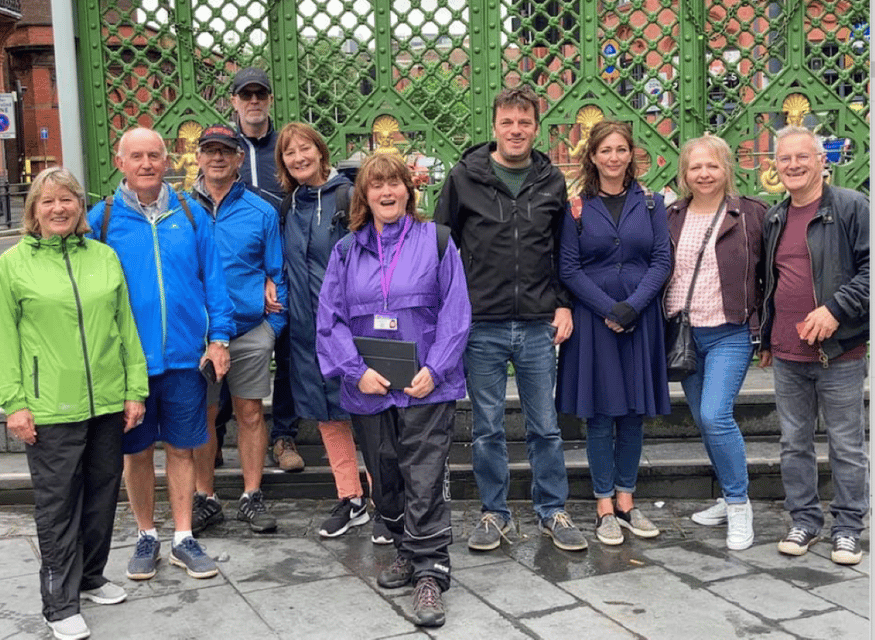
- The meeting point is inside the cruise welcome area: Disembark, walk up the covered ramp into the white building, and look for a guide wearing purple and holding a Liverpool Famous Walking Tours sign.
- You cover old Liverpool and modern Liverpool in two hours: The route includes Derby Square, the waterfront, Royal Albert Dock, Mathew Street, the Cavern Club area, and Town Hall.
- The Beatles appear as part of the city walk: You pass the Cavern Club and can stop for a photo with the Beatles Statue.
- The maritime story is not polished away: The tour addresses Liverpool’s docks, the Titanic connection, and the city’s role in the slave trade.
- It is accessible but not effortless: The route welcomes wheelchairs and strollers, yet you should expect busy streets and some uneven cobbles.
- English is the tour language: You get a live local guide, and well-behaved dogs are welcome in the walking group.
Why this two-hour walk works well from a cruise ship
A shore excursion has one basic job: use limited time wisely. This walk does that by staying in central Liverpool and connecting several major sights without requiring a bus or taxi between them.
You meet your guide after leaving the ship, which keeps the beginning simple. The covered ramp leads into the white cruise welcome building, where the guide wears purple and holds a welcome sign for Liverpool Famous Walking Tours. That clear visual cue matters when several groups may be gathering near the terminal.
The route is described as an easy walking tour, but easy does not mean perfectly smooth. You move through busy city areas and may cross cobbled or uneven surfaces. If you use a wheelchair or stroller, the locations are accessible, but group walking and old paving can still affect your comfort.
The tour runs for two hours, with starting times depending on availability. That makes it a good fit for a cruise stop, but you should check the timing carefully against your ship’s schedule. There is no meal or drink included, so treat this as a sightseeing walk rather than a food tour.
More History Tours in the UK:
- Invergordon Cruise Excursion – Castle ,Whisky and History Tour
★ 5.0 · 37 reviews - Liverpool Heritage, History, Culture Walking Tour-Shore Excursion
★ 4.5 · 21 reviews - Invergordon: Hidden History Walking Tour With a Guide
★ 5.0 · 2 reviews
Derby Square and the castle that disappeared
One of the first useful stops is Derby Square, where the guide explains the story of Liverpool Castle. The castle itself is gone, but the square now has an imposing monument to Queen Victoria.
This is a good example of what the tour does best. Instead of showing you only what survives, the guide helps you picture the city beneath the present-day streets. A missing castle can sound abstract in a guidebook, but standing in the square gives the story a physical setting.
The stop also sets up the wider theme of Liverpool’s changing identity. You move through a city shaped by royal connections, commerce, shipping, music, and new development. The personal stories from the guide are meant to connect those periods rather than present a string of dates.
I would pay attention here if you enjoy urban history. You are not simply ticking off a monument. You are learning how Liverpool’s central spaces changed as older buildings and institutions gave way to later civic uses.
A dry dock, a fountain, and a changing city symbol
The tour then reaches an area connected with Liverpool’s first dry dock. A large water fountain marks the maritime story, while an oversized LIVERPOOL sign offers one of the more modern photo stops.
The sign’s colors change for seasons or special events, so its appearance may differ from one visit to another. It is not an ancient monument, of course, but it shows how the city presents itself today. If you like taking quick travel photos, this is an easy place to pause.
The dry dock reference adds more weight to the waterfront portion of the walk. Liverpool grew through its links with the sea, and the docks were not just scenery. They affected work, trade, migration, wealth, and the city’s place in the world.
Importantly, the tour also addresses Liverpool’s role in the slave trade. That subject belongs in any serious account of the city’s commercial past. You get a more honest picture when the guide discusses both maritime achievement and the human cost tied to some of that trade.
Royal Albert Dock and Liverpool’s maritime past
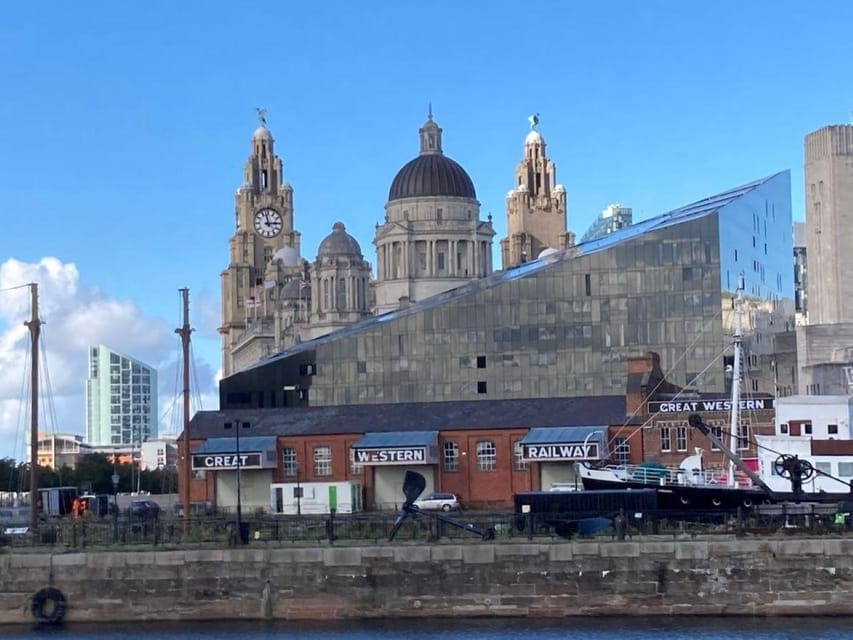
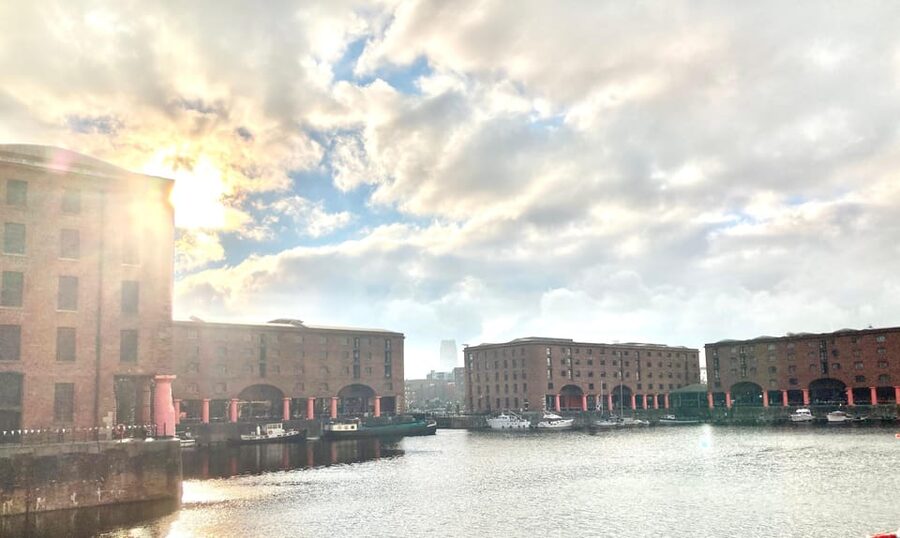
Royal Albert Dock is likely to be one of the main visual highlights. Its listed buildings and open waterfront make it easy to see why the area has become one of Liverpool’s best-known public spaces.
Here, the guide explains how the docks helped shape the city’s development. The tour also connects Liverpool with the Titanic story, showing how that famous ship has become part of the city’s maritime identity.
The Titanic connection needs a little context. Liverpool is tied to the ship through its registration and maritime links, even though the Titanic did not sail from Liverpool on its final voyage. A good guide can help you separate the city’s genuine connection from the broader legends that often gather around the subject.
Royal Albert Dock is also a useful pause in the route because the setting is spacious compared with some of the narrower city streets. You can look across the water, examine the old dock architecture, and then listen as the guide places those buildings within Liverpool’s working port story.
The drawback is that popular waterfront areas can feel busy, especially when cruise passengers and city visitors are out at the same time. Keep close enough to hear the guide, and do not expect a quiet, private viewing of every landmark.
More Walking Tours in the UK:
- Beatles Famous Walking Tour Of Liverpool-Shore Excursion
★ 5.0 · 50 reviews - Beatles Famous Walking Tour Of Liverpool-Shore Excursion
★ 4.8 · 5 reviews - Livorno: Florence Optional Walking Tour and Accademia Entry
★ 4.3 · 671 reviews - Juneau Shore Excursion: Helicopter Tour and Guided Icefield Walk
★ 5.0 · 536 reviews
The Three Graces and Liverpool’s grand waterfront face
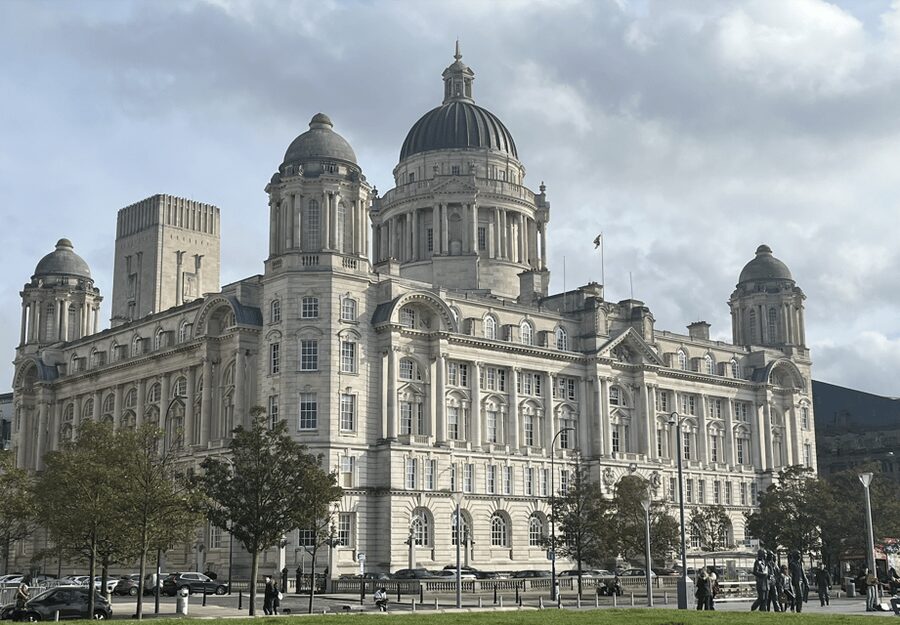
The Three Graces are the tour’s major architectural group. They are the Cunard Building, the Port of Liverpool Building, and the Liver Building, all part of Liverpool’s famous waterfront image.
The Cunard Building is Grade II listed and reflects the city’s links with ocean travel and the Cunard shipping company. The Port of Liverpool Building adds another formal piece to the waterfront, while the Liver Building is the most instantly recognizable of the three.
You do not just see these buildings as a row of impressive facades. The guide explains their heritage and how the waterfront represented Liverpool’s commercial reach. Their scale makes more sense when you understand that they were built for a city deeply tied to shipping and international business.
This is a good place to slow down and look at details above street level. I often find that grand civic architecture works best when someone explains why it was built and who used it. Without that context, you might take a quick photo and move on.
The buildings are listed, so the tour gives you an architectural experience without requiring an indoor museum visit. That helps the schedule, but it also means you will not be touring the interiors as part of this walk.
Exchange Flags and the route toward Town Hall
At Exchange Flags, the buildings form a handsome courtyard facing the Town Hall. It is a compact urban space with a strong sense of civic order, and it provides another change of pace after the open waterfront.
The guide uses this area to explain Liverpool’s civic and commercial development. You can compare the formal courtyard with the working dock spaces and the entertainment district still to come.
The route then approaches the current Grade I listed Town Hall, described as one of England’s finest surviving eighteenth-century town halls. The guide also explains the buildings that came before it, with predecessors dating back to the 1500s.
That long sequence makes the Town Hall more than a decorative endpoint. It shows how Liverpool’s civic center developed over several centuries. You see the city’s public face, not only its docks and music venues.
As with the other architectural stops, the value comes mainly from the explanation. If you prefer entering buildings and spending time inside them, this excursion may feel too external. If you enjoy seeing how streets and facades fit together, the route offers plenty to examine.
Mathew Street, the Cavern Club, and Beatles Liverpool
Mathew Street shifts the mood completely. It is famous for the Cavern Club and for its links with The Beatles and other musical figures.
You walk in the footsteps of musical icons, but the tour does not reduce Liverpool to a Beatles souvenir stop. Instead, Mathew Street forms one part of a larger city story. The street shows how music became central to Liverpool’s public identity and international reputation.
The Cavern Club is the key landmark here. You pass by it rather than receiving an included club visit, so check your expectations. This is a walking tour with a musical connection, not a full Beatles attraction tour.
You also have a chance to take a photo with the Beatles Statue, sculpted by Andrew Edwards. It is a useful stop for a classic Liverpool picture, especially if your cruise schedule leaves little time for a separate Beatles tour.
I like this section because it places the Fab Four among the city streets that shaped their story. You are not seeing the group only on a museum display. You are walking through the district where Liverpool’s music culture became part of its lasting image.
Mathew Street can be busy and noisy. That adds to the atmosphere, but it can make it harder to hear every word. Stay close to the guide and be ready for a quick photo rather than a long, quiet stop.
The guides make the difference
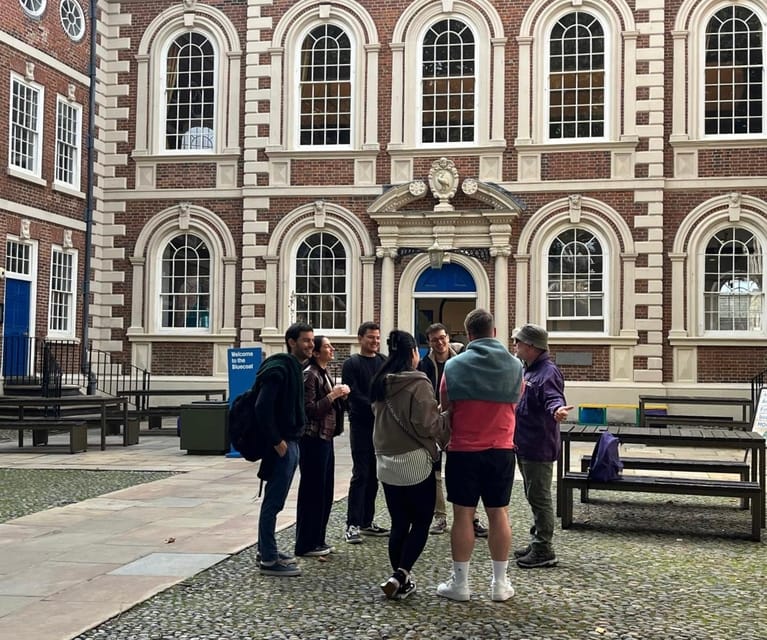
The itinerary covers plenty, but the guide is what determines how much you take away. The experience uses local Liverpool guides who tell personal stories from the era of King John through to modern times.
That broad time span could easily become a rushed list of facts. The personal approach helps link the old and new parts of the city. You hear about buildings, vanished landmarks, maritime events, civic spaces, and music as parts of one continuing story.
The available feedback gives useful clues about the guiding style. One guest specifically praised a guide who took time to speak slowly and address a deaf husband directly. That suggests a considerate approach to communication, though you should still tell the guide about any needs before the walk begins.
Another booking had only two people and became a private tour. You should not assume that every departure will be private, but a small group can allow more questions and a pace that feels more personal when numbers are low.
The tour is in English only. If you follow spoken English comfortably, the live narration should add much more than a self-guided route. If you need another language, this is not the right match based on the information provided.
Is $31 good value?
At $31 per person, I consider this a fair price for a two-hour guided introduction, especially when you are arriving by cruise ship. You get a local guide, a carefully connected central route, and explanations at places that are easy to pass without understanding.
The value is strongest if you want orientation. After the walk, you should know where the waterfront, civic center, Mathew Street, and major Beatles-related sights fit in relation to one another. That can help you decide what deserves more of your independent time.
The price does not include food or drinks, and it does not cover an indoor attraction. You are paying for the guide and the walking experience, not admission to museums or the Cavern Club.
For two hours, the route is fairly full. You see many important locations, but you will not have long periods to explore each one. I would choose this tour for context and coverage, not for deep visits inside individual buildings.
Free cancellation up to 24 hours before the start and the option to reserve now and pay later add useful flexibility. Those terms are especially practical when your cruise plans may change, though you should still check the departure time before booking.
Who should book this Liverpool walk?
I would recommend it to first-time visitors who want a clear introduction to Liverpool without arranging several separate stops. It suits cruise passengers, architecture fans, Beatles followers, and anyone curious about the city’s maritime past.
It also works well for people who prefer stories to audio guides. The live guide can answer questions and adjust explanations, and the high ratings point to strong satisfaction with the personal service.
Families may find the changing subjects useful, since the route moves from castles and queens to docks, ships, music, and famous buildings. Well-behaved dogs are welcome, although busy streets and cobbles may make the walk less relaxing for some pets.
I would hesitate if you dislike walking in groups, need a very slow pace, or want extensive indoor sightseeing. The route includes uneven surfaces and busy areas, and two hours leaves little room for lingering.
Final decision: a smart shore excursion for first-time visitors
Book this tour if you want Liverpool explained through its streets. The combination of Royal Albert Dock, the Three Graces, Derby Square, Town Hall, Mathew Street, the Cavern Club, and the Beatles Statue gives you a useful first look at several sides of the city.
I especially like that the route includes difficult subjects such as the slave trade alongside the city’s maritime achievements. That balance makes the tour more honest than a walk focused only on grand buildings and famous musicians.
Choose it with realistic expectations. You will get an engaging outdoor overview, not a museum tour, private Beatles pilgrimage, or food experience. For $31 and two hours, it is a practical choice when you want local stories, major landmarks, and a solid sense of Liverpool before returning to your ship.
FAQ
How long does the Liverpool walking tour last?
The tour lasts two hours.
What is the price per person?
The listed price is $31 per person.
Where do I meet the guide?
After leaving your cruise ship, walk up the covered ramp into the white cruise welcome building. The guide will meet you there wearing purple and holding a welcome sign for Liverpool Famous Walking Tours.
What language is the tour conducted in?
The live tour guide speaks English.
What landmarks are included?
The route includes Derby Square, the former site of Liverpool Castle, the waterfront, Royal Albert Dock, the Three Graces, Exchange Flags, Mathew Street, the Cavern Club area, Liverpool Town Hall, and the Beatles Statue.
Does the tour discuss Liverpool’s role in the slave trade?
Yes. The tour covers Liverpool’s maritime past and its role in the slave trade.
Is the walking tour wheelchair accessible?
The locations are accessible to wheelchairs and strollers. However, you should expect group walking in busy areas and some uneven surfaces, including cobbles.
Are dogs allowed on the tour?
Well-behaved dogs are welcome. Keep in mind that the group may pass through busy areas and over uneven surfaces.
Can I cancel the booking for a refund?
You can cancel up to 24 hours in advance for a full refund. The tour also offers a reserve-now, pay-later option.
Just added around the UK
- Ultimate Ticket To Ride Beatles Half-Day Shore Excursion- Private★ 5.0 · 6 reviews
- Shore Excursion: Lake District Adventure Sightseeing Day Trip from Liverpool★ 4.0 · 5 reviews
- Liverpool Heritage, History, Culture Walking Tour-Shore Excursion★ 4.5 · 21 reviews
- Liverpool to Wales Shore Excursion with Conwy Castle★ 4.0 · 10 reviews
- Shore Excursion Kirkwall Small Group Highlights of Orkney★ 5.0 · 5 reviews
- Full-Day Outlander Experience (inc Invergordon Cruise Port)★ 5.0 · 16 reviews
- loch Ness, Inverness and Outlander Sites From Invergordon Port★ 5.0 · 8 reviews
- Full-Day shore excursion-★ 5.0 · 2 reviews
Liverpool Shore Excursions, compared.

Ultimate Beatles Ticket To Ride Shore Excursion-Small Groups
Read our review →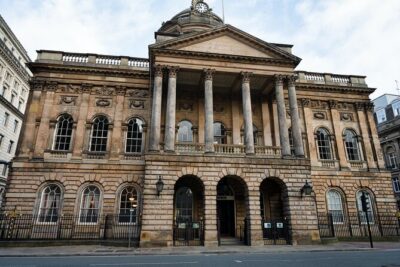
Beatles Famous Walking Tour Of Liverpool-Shore Excursion
Read our review →

Shore Excursion: North Wales Adventure Sightseeing Day Trip from Liverpool
Read our review →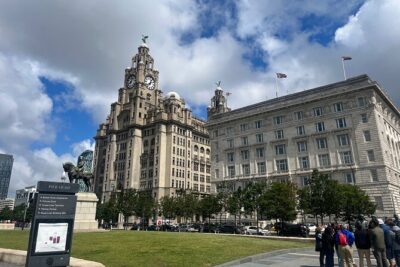
Liverpool Heritage, History, Culture Walking Tour-Shore Excursion
Read our review →

Liverpool to Wales Shore Excursion with Conwy Castle
Read our review →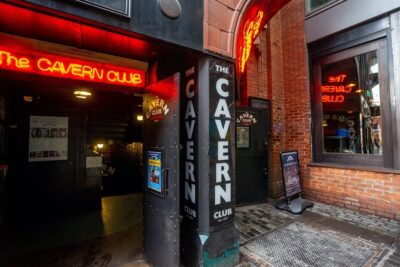
Ultimate Ticket To Ride Beatles Half-Day Shore Excursion- Private
Read our review →Browse the lists this tour appears in