
Review · INDONESIA SHORE EXCURSIONS
Jakarta Port: Private Guided City Highlights Shore Excursion
Jakarta rewards a well-planned shore day. This private excursion gives you door-to-door port transport and a compact look at old Batavia, Glodok, museums, and Sunda Kelapa Harbor. I like the air-conditioned minivan, included entrance fees, parking, tolls, and mineral water. I also like the private format, which can give you room to adjust the day.
The main caution is guide quality. Some guests had excellent, helpful guides, while others found their guide too inexperienced or quiet to explain Jakarta well. Monday museum closures are another serious concern, so check the day of your visit before booking.
Key points to know before you book
- Six hours from ship to ship: The tour begins at Tanjung Priok Port and returns you there before departure.
- Old Batavia is the historical core: Dutch colonial buildings and the former town hall help explain Jakarta’s past.
- Glodok offers a different side of the city: Jakarta’s Chinatown is tied to Chinese Indonesian trade, worship, and daily life.
- Museum visits depend on the day: The Jakarta History Museum and National Museum may be closed on Mondays.
- A private vehicle saves energy: Jakarta traffic can make walking between sights impractical in a short port call.
- The guide matters greatly: Resti received praise for her friendly manner, but other guides were criticized for weak explanations.
A practical port day in Jakarta
This is designed for cruise passengers who want a private introduction to Jakarta without arranging separate taxis, entrance tickets, and timing. Your guide meets you in the arrival hall at Tanjung Priok Port, holding a sign with your name. From there, you ride in an air-conditioned minivan with a driver and guide.
That arrangement is useful in Jakarta. The city is large, traffic can be slow, and a six-hour shore visit leaves little room for wrong turns. Having the driver handle parking, toll roads, and the route lets you spend more of your time looking out the window instead of negotiating transport.
The tour price is $86 per person. That is a reasonable package if the vehicle is shared by only your private party and you visit several included attractions. It covers port pickup and return, the vehicle, guide, parking, tolls, water, and entrance fees. Lunch and the guide’s tip are extra.
The value depends heavily on how much of the route you complete and how well the guide explains it. A strong guide turns a series of buildings into a story about Batavia, Chinese Indonesian communities, colonial trade, and modern Jakarta. A weak guide can leave you simply looking at signs and displays on your own.
More City Highlights Shore Excursions in Indonesia:
- Semarang City Tour For Cruise Passengers
★ 4.2 · 11 reviews - From Civitavecchia: Full-Day Panoramic Bus Tour of Rome
★ 4.0 · 1,260 reviews - Corfu: Paleokastritsa Beach and Old Town Bus Shore Excursion
★ 4.3 · 704 reviews
Dutch Batavia around Fatahillah Square
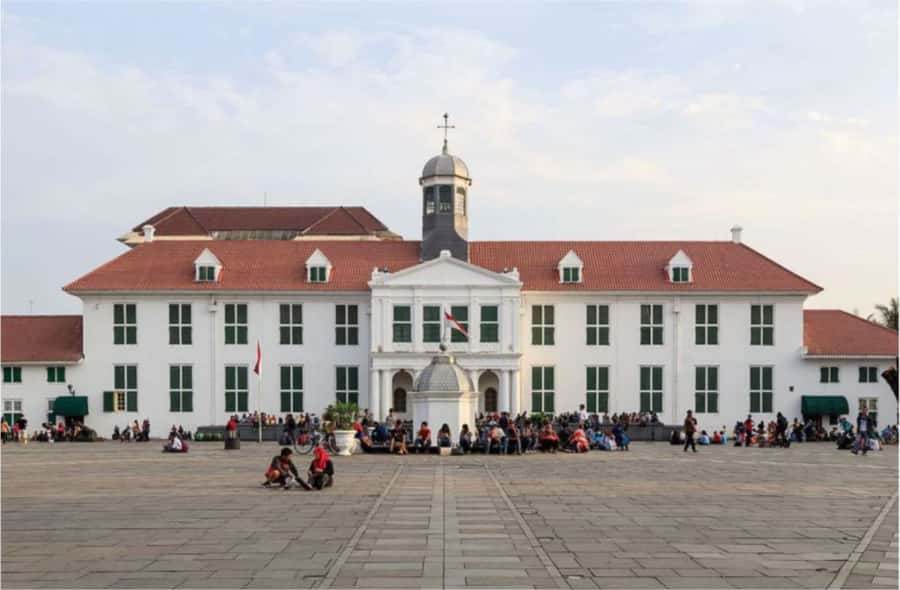
The first part of the city drive takes you through Jakarta’s old district, where Dutch-style buildings recall the period when the city was known as Batavia. The architecture gives you a useful starting point because Jakarta’s modern streets can otherwise feel sprawling and difficult to place.
The Jakarta History Museum, also called Fatahillah Museum, occupies the old town hall of Batavia. The building itself is part of the lesson. You are not just entering a museum, you are seeing a former center of colonial administration.
The museum helps frame Indonesia’s time under Dutch rule, though your visit will be much more rewarding if your guide gives clear background before you enter. Ask about the building, the purpose of the old town hall, and how Batavia fitted into Dutch trade in the region.
There is an important scheduling problem here. The museum can be closed on Monday. One port passenger visited on a Monday and found several museums shut, although the colonial buildings, old harbor, mosque, and cathedral still made the day worthwhile. If your ship docks Monday, confirm what will actually be open before you pay for a museum-focused itinerary.
Glodok and Jakarta’s Chinese Indonesian story
The route continues to Glodok, Jakarta’s Chinatown. The district is associated with banking, trade, entertainment, and Chinese Indonesian life. Your guide is meant to explain the story of Batavian Chinese communities, which adds context that you will not get from a quick drive through the streets.
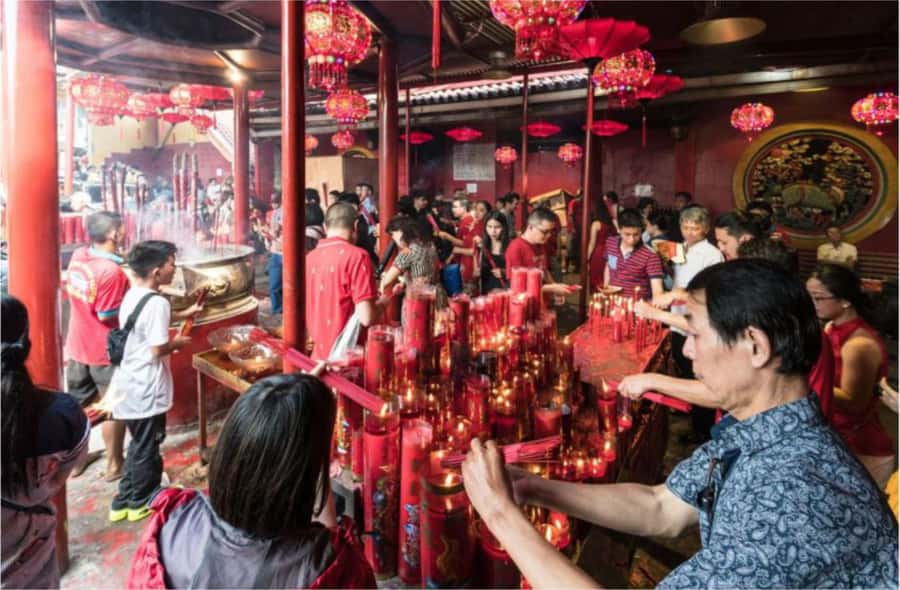
Set your expectations carefully. This is not presented as a long food walk or an extended market visit. One guest who wanted to walk through Chinatown mainly saw two places of prayer. That can still be worthwhile, but it means Glodok may feel brief rather than like a full neighborhood tour.
I would ask your guide in advance how much time you can spend on foot. If you want photographs, street scenes, or a closer look at religious and commercial life, say so early. A private tour gives you more opportunity to request this than a large group excursion, although traffic and the ship’s departure time remain the limits.
Glodok is valuable because it broadens the story beyond colonial buildings. Jakarta is not only Dutch Batavia, and this stop gives you a chance to hear about the Chinese Indonesian presence that helped shape commerce and city life.
The National Museum’s Javanese and Asian collections
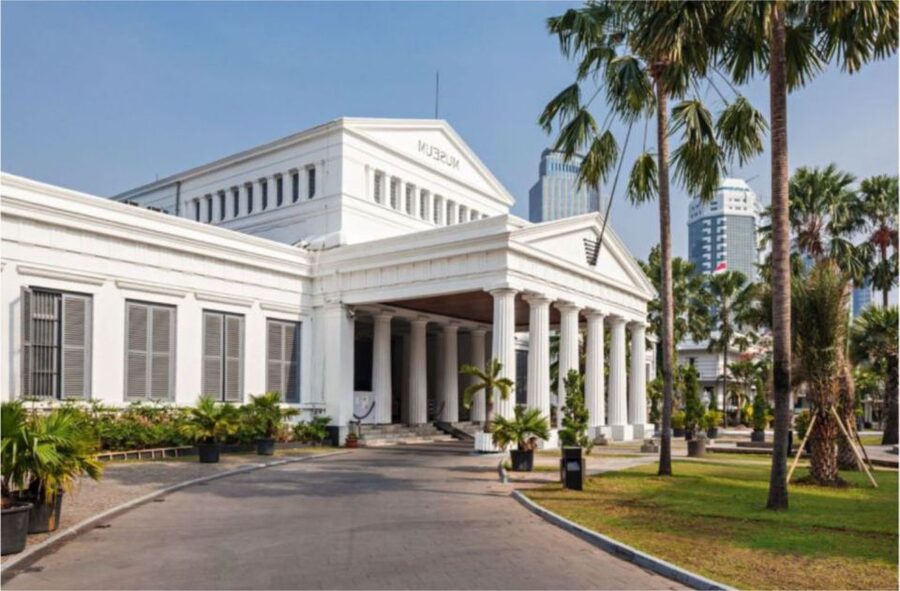
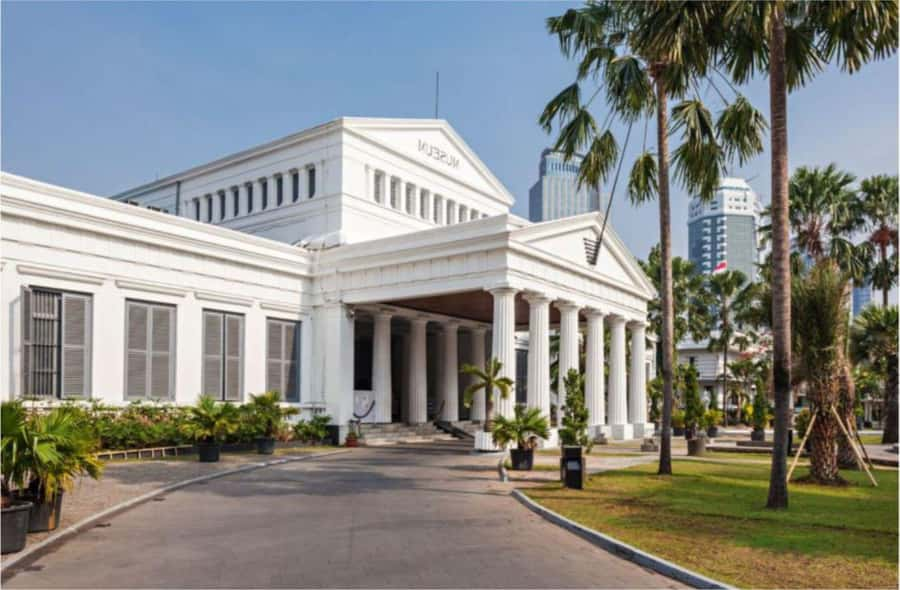
The National Museum is the most useful stop for understanding Indonesia beyond Jakarta. Its displays include costumes, musical instruments, model houses, fine bronzes from the Hindu-Javanese period, stone pieces from Central Javanese temples, and Chinese ceramics.
Those objects cover a wide span of Indonesian culture. The model houses and costumes can help you see how different communities express identity, while the bronze and stone pieces point to older Hindu and Javanese traditions. The Chinese ceramics add another link to the trading connections that shaped the region.
This museum stop needs a good guide. One guest found the guide mostly pointed at signs and objects, leaving the group to work out the meaning alone. Another group had a much better experience with a guide who explained the museum and the history around it. That contrast is important: the collection has enough substance to reward explanation, but labels alone may not give you the visit you hoped to buy.
If your guide is quiet, ask direct questions. What period is this object from? Where was it found? How did Chinese ceramics reach Java? Which pieces are from Central Java? Simple questions can turn a passive museum visit into a conversation.
The museum may also be closed on Monday, so this is the second major scheduling issue. If both museums are shut, the day becomes more focused on exterior sights and driving.
More Private Shore Excursions in Indonesia:
- Bali Shore Excursions : Private Bali Car Rental Service
★ 5.0 · 81 reviews - Bali private Shore Excursion from Benoa Port – All Inclusive
★ 5.0 · 58 reviews - Bali Private Driver (Airport pickup, Customize Tour,Group Tour)
★ 5.0 · 21 reviews - Private Shore Excursion: Ubud Art Villages and Sacred Monkey Forest
★ 3.5 · 4 reviews
Sunda Kelapa, Jakarta’s old maritime gateway
Sunda Kelapa Harbor was once the center of Jakarta’s maritime trade. During the colonial period, it was called the Roads of Batavia and served as the only entrance to Batavia.
This stop connects the city’s colonial buildings with the wider trading world. Jakarta grew because ships, goods, and people moved through its port. Even a short visit gives you a useful reminder that Batavia was not an isolated administrative town.
The harbor is also a change of pace from museums. You can look at the working waterfront and consider how different this setting feels from the city’s newer commercial districts. The exact amount of time here will depend on traffic and the rest of the schedule, so do not expect a long harbor walk unless your guide confirms it.
For me, this is one of the stops that gives the itinerary a sense of place. A museum can explain trade, but the harbor helps you picture it.
Istiqlal Mosque and Jakarta Cathedral
If time allows, the tour may include Istiqlal Mosque and Jakarta Cathedral. Istiqlal is described as the largest mosque in Southeast Asia, while the cathedral is a Roman Catholic landmark.
Their location near one another gives the stop added meaning. You can see two important religious institutions within the same part of Jakarta and hear how they fit into the city’s public life. The visit may be brief, especially if traffic has eaten into the six-hour schedule.
Do not treat these stops as guaranteed in the same way as the main route. The wording allows them if time permits, and the itinerary already covers several sites. If these buildings are a priority, tell your guide at the start and ask how much time can be protected for them.
You should also dress and behave respectfully at religious sites. The available tour details do not specify an interior visit or a required dress code, so ask your guide what is permitted when you arrive.
Why the private vehicle helps
The air-conditioned minivan is more than a comfort feature in Jakarta. It gives you a place to cool down between stops and keeps the group together in a city where distances can be deceptive.
The driver received strong praise for safe driving and useful support. One group changed its plans at short notice and went instead to Bogor Botanical Garden and waterfalls. The driver handled the altered route safely, while the guide helped with an uneven and slippery path. That shows the private format can offer useful flexibility.
Still, do not assume every change of plan will fit. A Bogor and waterfall day is a different outing from a city highlights route, and the tour’s written plan focuses on Jakarta. If you want to replace the city with nature, agree on the route, timing, and any extra costs before leaving the port.
The driver and guide also have separate jobs. A safe driver helps you return to the ship; a strong guide makes the places meaningful. You need both for this tour to feel worth the price.
Guide quality can make or break the day
The most important variable here is the person assigned to your group. Resti was described as friendly and pleasant, and communication at the port worked well. Other guests found their guide’s English basic or soft-spoken, and one guide relied on Google Maps and seemed unfamiliar with the museum.
That does not mean you should expect a poor tour. It does mean you should take an active role. At the port, confirm the plan and ask which sights are open. At each stop, ask for the background you want. If you prefer more walking in Glodok or more time at the harbor, say so before the schedule becomes tight.
The guide should be able to explain the main facts rather than simply point to signs. If that does not happen, you may need to read more for yourself. One group improved its museum visit by accepting help from a maritime museum guide, but that required paying extra.
A private tour is not automatically a private lecture. The quality of the conversation depends on the guide’s preparation and your questions.
Timing, Monday closures, and the ship’s departure
Six hours sounds generous, but Jakarta traffic can quickly shorten the sightseeing time. The operator promises pickup and return to the cruise terminal, which is the central value for a shore excursion. You are not left to find your own taxi at the end of the day.
I would keep the final part of the schedule conservative. The goal is not to squeeze in every possible sight and then worry about the ship. It is better to see fewer places with enough time to return calmly.
Monday is the key day to check. The Jakarta History Museum and National Museum may be closed, and one Monday visit lost both museum stops. The colonial district, old harbor, mosque, and cathedral can still provide a worthwhile day, but the tour will not match the printed museum plan.
Before booking, confirm:
- Which museums will be open on your docking day
- Whether Istiqlal Mosque and the cathedral can fit
- How much walking is planned in Glodok
- What happens if traffic prevents one stop
- When you will leave the final sight for the port
Free cancellation up to 24 hours before the tour and the reserve-now, pay-later option give you some flexibility. They are useful if your port schedule is uncertain, but they do not solve a museum closure on the day itself.
Who should book this Jakarta excursion?
I would choose this tour if you want a private vehicle, a guide, and a planned return to the ship. It suits first-time visitors who want a broad introduction rather than one long museum visit. Families and small groups may also appreciate the air conditioning and the ability to adjust the pace.
It is less suitable if you need a consistently expert museum lecture or a tightly guaranteed list of every stop. The guide reports are uneven, and the optional religious sites depend on time. It is also not ideal for a Monday port call if museums are your main reason for booking.
At $86 per person, the package makes sense when the vehicle is comfortable, the guide is prepared, and several entrance fees are used. The price feels less convincing if museums are closed and the guide offers little explanation. For the best value, book on a non-Monday and contact the operator with specific questions about the guide, museum hours, and planned walking time.
Final call: book it with the right expectations
Book this excursion if port security, private transport, and a broad city overview matter most to you. You will see colonial Batavia, Glodok, the National Museum, Sunda Kelapa, and possibly the mosque and cathedral without having to manage Jakarta traffic yourself.
I would be cautious if your ideal day depends on expert interpretation at every museum. The operator has provided friendly and flexible guides, but the quality has not been consistent. Confirm the schedule, ask for a guide who can explain Indonesian history clearly, and avoid Monday if the museums are central to your plan. With those checks, this can be a practical first look at Jakarta from the cruise port.
FAQ
Where does the tour begin?
Meet your guide in the arrival hall of Tanjung Priok Port of Jakarta. The guide will hold a sign with your name.
How long is the shore excursion?
The tour lasts six hours, including pickup and return to the cruise terminal.
What language is the tour conducted in?
The live tour guide speaks English.
Is transportation included?
Yes. Port pickup and drop-off, an air-conditioned vehicle, parking fees, toll fees, and mineral water are included.
Are entrance fees included?
Yes, entrance fees are included in the tour price.
Is lunch included?
No. Lunch is not included.
Can I cancel the booking for a refund?
Yes. You can cancel up to 24 hours in advance for a full refund. You can also reserve now and pay later.
Just added around Indonesia
- Bali Private Driver (Airport pickup, Customize Tour,Group Tour)★ 5.0 · 21 reviews
- Discover Bali : Shore Excursion from Benoa Port with Free Wi-Fi★ 5.0 · 25 reviews
- Private Shore Excursion: Ubud Art Villages and Sacred Monkey Forest★ 3.5 · 4 reviews
- Bali Shore Excursion: Nusa Dua Beach Half Day Tour★ 3.5 · 3 reviews
- Bali Shore Excursions : Best of Bali Tour★ 5.0 · 48 reviews
- Surabaya Port: Tailored City Shore Excursion with Guide★ 4.5 · 3 reviews
- Surabaya Shore Excursions: 6–8 Hour Surabaya/Trowulan/Madura★ 5.0 · 2 reviews
- Semarang City Tour For Cruise Passengers★ 4.2 · 11 reviews
Indonesia Shore Excursions, compared.
Bali Shore Excursions : Private Bali Car Rental Service
Read our review →
Bali private Shore Excursion from Benoa Port – All Inclusive
Read our review →
Bali Benoa Shore Excursion for cruise’s passenger – All Inclusive
Read our review →
Bali: Shore Excursion for Cruises’s passenger -All Inclusive
Read our review →
Discover Bali : Shore Excursion from Benoa Port with Free Wi-Fi
Read our review →
Bali Private Driver (Airport pickup, Customize Tour,Group Tour)
Read our review →Browse the lists this tour appears in