
Review · LIVORNO SHORE EXCURSIONS
An authentic Italian morning in Livorno
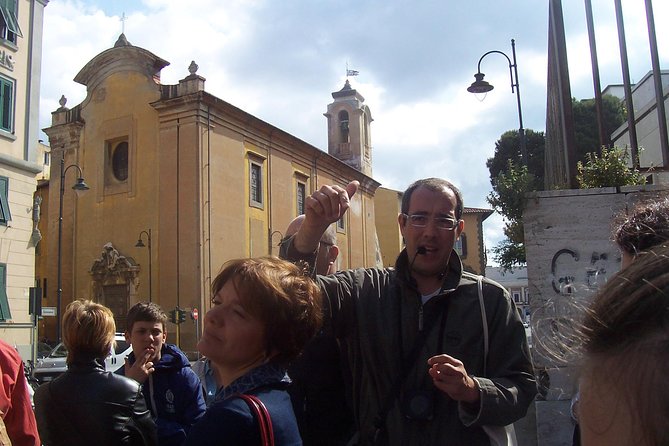
Livorno rewards a closer look. This two-hour morning walk turns a cruise-port stop into a real introduction to the city, with local guide Pierino Marconcini leading you through canals, forts, markets, and the streets of his hometown. I like the early start and the small group size, which leave your afternoon open and make the walk feel more personal.
I also like the central meeting point at Piazza del Municipio, close to the cruise shuttle drop-off. The main consideration is simple: this is a walking tour, not a grand sightseeing bus ride, and it focuses on Livorno rather than Pisa or Florence. If famous Tuscan landmarks are your main goal, you will need a different plan.
Key points at a glance
- A local guide with deep ties to Livorno: Pierino Marconcini was born and raised in the city and has worked as a high school teacher, adding context to the streets, buildings, and local life.
- A compact two-hour route: You see key parts of central Livorno without giving up the rest of your day.
- The New Venice quarter: Canals once helped merchants move goods between the city and port.
- A real food-market stop: Mercato Delle Vettovaglie offers local produce and a look at daily Livorno life.
- Coffee is included: The morning ends with coffee or tea, and the experience has been praised for its espresso and cappuccino.
- A maximum of eight people: The small format gives you room to ask questions and, when possible, shape the walk around your interests.
Why Livorno deserves a morning
Livorno is often treated as a place to leave behind. Cruise passengers arrive, look for a train to Pisa or Florence, and miss the port city itself. That is a shame. Livorno has a different character from the postcard towns of Tuscany. It is a working coastal city shaped by trade, defense, canals, migration, war, and rebuilding.
This tour gives you a useful first look without pretending that two hours can explain everything. You walk through the old center, hear how the city began, see traces of its military past, and finish among food stalls and coffee cups. The pace is practical for a port call.
I especially value the local focus. The guide is not simply pointing out attractive façades. Pierino explains how Livorno developed and brings in stories about the city before and after the Second World War. One particularly useful part of the walk is the attention to surviving wall sections and underground canals, details easy to miss if you wander alone.
The experience is conducted in English and normally has no more than eight people. That matters in Livorno, where a guide can make the difference between seeing an old wall and understanding why it is there.
More Morning Departures in Livorno:
- Lisbon: Early Morning TukTuk Tour – hotel/cruise ship pickup
★ 4.9 · 45 reviews - Sapphire Coast: 7h Shore Excursion with Aussie Morning Tea
★ 5.0 · 5 reviews - Lisbon Early Morning TukTuk Tour with hotel or cruise ship pickup
★ 5.0 · 3 reviews
Meeting Pierino near Piazza del Municipio
The walk begins at Piazza del Municipio, 8, at 9:30 in the morning. This is in the heart of the historic center and is especially convenient if you arrive by cruise ship. The meeting point is close to the cruise shuttle bus drop-off, which removes one common source of port-day stress.
I would still allow time to get off the ship, take the shuttle, and find the square. Cruise schedules can slip, and the tour has a set start time. One useful detail from the experience is that Pierino has shown understanding when transport delays caused a late arrival. That is reassuring, but it should not be treated as a promise that the group can always wait.
The route is on foot. Comfortable shoes are the sensible choice, since the walk includes old streets and cobblestones. The tour is near public transportation, service animals are allowed, and most people can take part. The supplied details do not promise a fully step-free route, so anyone with mobility concerns should ask before booking.
The small group limit is one of the strongest practical features. With up to eight people, you can usually hear the guide clearly and ask about local customs, Italian life, or the city’s past. Several participants ended up in groups of only two, though that cannot be guaranteed.
The city’s founding symbol and the Medici victory
One early stop presents the symbol of Livorno’s foundation and recalls the Medici victory over pirates. The exact monument is less important than the story it introduces: Livorno was not an accidental collection of streets beside the sea. Its growth was tied to power, maritime trade, and the need to protect commercial routes.
This is the kind of stop that gives the rest of the walk a frame. You begin to see Livorno as a planned port city, not just a convenient place for ships to dock. The guide connects the monument to the city’s early development and the Medici role in shaping it.
Pierino’s background helps here. He was raised in Livorno and has spent his working life teaching, so the history lesson is meant to be explained rather than recited. You can expect dates and political context, but also an effort to show how those events affected the city you are walking through.
Do not expect a long visit inside a museum at this point. This is an outdoor orientation stop, useful for getting your bearings and understanding the city’s origins.
New Venice and Livorno’s canals
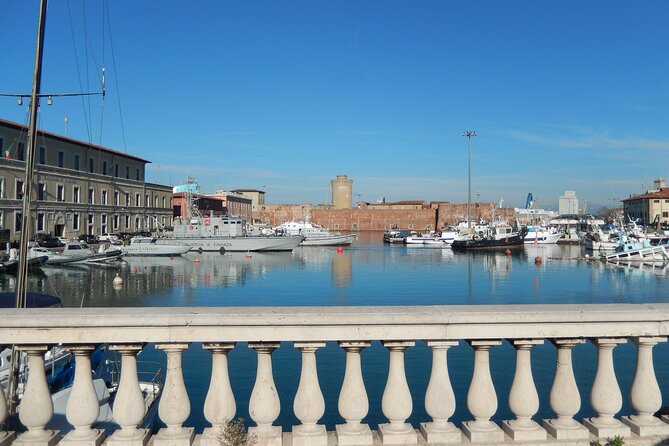
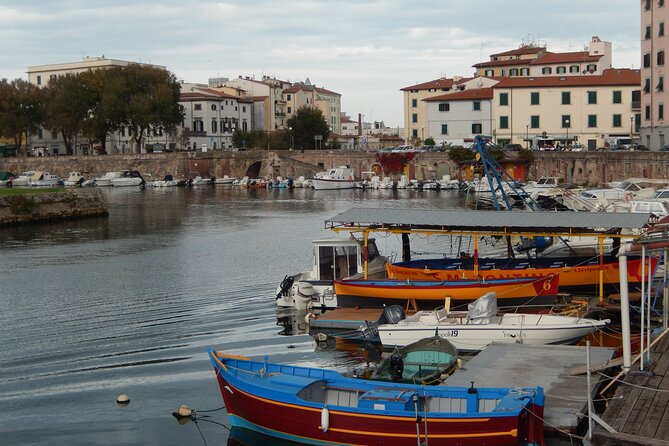
The route then reaches New Venice, a quarter built on water for merchants and their commercial work. Canals linked parts of the city with the port, creating a practical network for moving goods. This is one of the most distinctive parts of the tour because it gives Livorno a character that many first-time visitors never see.
The name can create the wrong expectation. This is not a substitute for Venice, and the tour does not present it as one. Its value is in seeing how Livorno adapted its streets and waterways to trade. The canals are part of the city’s working story, not merely a decorative backdrop.
This section also rewards a guide’s explanation. Without context, you may notice water, bridges, and old buildings but miss the commercial purpose behind them. With Pierino, you learn to look for the relationship between the city and the port.
The route can be particularly useful for anyone interested in urban design, maritime commerce, or the way Italian cities have changed over time. It also gives the walk some variety. You are not simply moving from one square to another and listening to a list of names.
Same port, a different day ashore:
- Livorno Shore Excursion: Florence & Pisa, Accademia & Tower
★ 4.3 · 1,172 reviews - Full day shore excursion to Florence and Pisa from Livorno with tasting
★ 4.5 · 968 reviews - Livorno: Florence & Pisa Shore Excursion with Food Tasting
★ 4.6 · 952 reviews - Livorno: Florence Optional Walking Tour and Accademia Entry
★ 4.3 · 671 reviews
The New Fortress, from military base to public garden
Another stop is the New Fortress, once used as a military base and now a public garden. That change tells you something important about Livorno: defensive structures have not all remained frozen in their old role. Some have been absorbed into ordinary city life.
The fortification offers a chance to consider the city’s military needs and its present-day use of public space. The tour does not appear to include a lengthy interior visit, so think of this as a guided look at a major landmark rather than a fortress admission experience.
That distinction helps set expectations. If you want a full archaeological or architectural tour, two hours will feel short. If you want a clear introduction to the fort and its place in Livorno, this stop fits the plan well.
I like the contrast between New Venice and the New Fortress. One reflects commerce and canals. The other reflects defense and military planning. Together, they show why Livorno developed as it did, with water and walls shaping daily life.
Mercato Delle Vettovaglie, the most local stop
The covered Mercato Delle Vettovaglie is the most grounded part of the walk. Open on working days, it offers local products and brings you into a place still tied to everyday shopping. This is where Livorno feels less like a collection of sights and more like a lived-in city.
The scheduled market visit lasts about 30 minutes, with no admission charge. That is enough time to look around, hear about local food, and get a feel for how the market fits into the center. You should not expect a formal cooking class or a full market lunch. Lunch is not included.
Coffee or tea is included, which suits the morning format. Several participants especially enjoyed the espresso or cappuccino at the end. The exact drink and setting are not described in detail, so I would think of this as a pleasant local pause rather than a full breakfast spread.
This stop also gives you a useful place to ask questions. Ask Pierino what people buy, how market shopping fits into Italian life, or which local foods are connected to Livorno. The point is not simply to photograph the stalls. It is to understand the city through the food its residents handle every day.
One past experience also included time at the market building with a taste of local food at lunch, but lunch is not part of the stated package. Plan on coffee or tea being included, and budget separately if you want to eat afterward.
A morning walk shaped by conversation
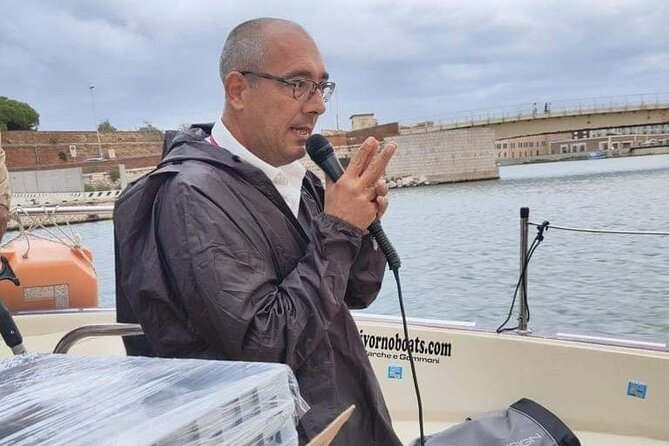
The strongest feature here is the guide. Pierino has been praised for his local knowledge, clear English, friendly manner, and ability to speak several languages. More than one person found that the history became easier to follow because he used humor and conversation rather than delivering a stiff lecture.
That matters on a small walking tour. You can ask about Italy beyond the monuments, including everyday life, education, local culture, and the changes Livorno experienced after the war. The route is planned, but the guide has also allowed people to steer parts of the discussion toward their own interests.
His teaching background is a real advantage. A good teacher knows that facts alone do not stay with you. You need a story, a connection, or a reason to care. Here, the surviving wartime walls and underground canals become clues to the city’s past rather than random details.
The high rating of 4.7 from 21 published ratings and the 90 percent recommendation rate support the idea that the guiding is the main strength. The praise is also consistent: people repeatedly highlight Pierino’s warmth, local experience, storytelling, and willingness to answer questions.
That said, a great guide cannot change the length of the tour. You will not see every corner of Livorno in two hours. The route gives you a thoughtful introduction, not an exhaustive city survey.
Is $54.01 a fair price?
At $54.01 per person, this is not the cheapest way to walk around Livorno. You can explore public streets and view the outside of many landmarks without paying an activity fee. The value comes from the explanation, the route planning, the small group, and the included coffee or tea.
For a cruise passenger with only a morning, that can be worthwhile. You do not have to research a route, decode the canals, or guess which central streets matter. You also finish around Via Cairoli, leaving the rest of the day open for more sightseeing, shopping, or a return to the ship.
The cost is harder to justify if you prefer wandering alone, already know Livorno well, or mainly want a transfer to another Tuscan city. Private transportation is not included, and neither is lunch. This is a city walk with a guide, not a shore excursion by vehicle.
The maximum group size of eight improves the value. A large group can make a walking tour feel generic. Here, the format gives you a better chance to speak directly with Pierino and ask about the things that catch your attention.
Timing, group size, and cruise-day planning
The tour starts at 9:30 a.m. and lasts about two hours. That makes it a good fit for someone who wants an early city introduction and still wants free time afterward.
The finish is at Via Cairoli, in central Livorno. Since the tour does not include private transportation, you are responsible for getting to the start and handling your onward plans. The central locations make this easier, but you should allow time for the return journey to the ship or any other transport.
The tour is offered in English and uses a mobile ticket. Confirmation is sent within 48 hours of booking, subject to availability. Since the experience averages 63 days of advance booking, planning ahead is sensible, especially if your cruise dates are fixed.
Free cancellation is available up to 24 hours before the start time. Cancellations or changes inside that window are not refunded or accepted. The tour also requires a minimum number of people, so if the provider cancels for that reason, you are offered another date or experience, or a full refund.
Who should book this Livorno experience?
I would choose this tour if you want to understand Livorno rather than simply pass through it. It suits cruise passengers, first-time visitors, history lovers, and anyone who prefers a local conversation to a large group presentation.
It is also a good match if you enjoy food markets, canals, military landmarks, and stories about how a city works. The two-hour length keeps the commitment manageable, and the morning schedule protects your afternoon.
I would look elsewhere if you want Pisa’s tower, Florence’s major museums, a full meal, or private transportation. I would also skip it if walking on old streets is difficult and you have not confirmed the route’s suitability in advance.
FAQ
Where does the tour start?
It starts at Piazza del Municipio, 8, 57123 Livorno, at 9:30 a.m.
Where does the tour end?
The tour ends on Via Cairoli in Livorno.
How long does the experience last?
It lasts approximately two hours.
Is coffee or tea included?
Yes. Coffee and/or tea is included.
Is lunch included?
No. Lunch is not included, and private transportation is also excluded.
How many people can join the tour?
The tour has a maximum of eight participants. Confirmation is subject to availability and a minimum number of participants.
Should you book it?
Book this walk if you want Livorno explained by someone who knows the city personally. Pierino Marconcini’s local background, teaching experience, and conversational style are the main reasons to choose it. The canals of New Venice, the New Fortress, the market, and the Medici story give you a useful cross-section of the city in a short time.
The best practical reason to book is the combination of small group, central meeting point, morning timing, and local guide. The main reason not to book is that the tour stays in Livorno and does not include transport, lunch, or the famous sights of Pisa and Florence.
For a port call, I think the experience makes a strong case for staying put. Livorno is more than a place to catch a train, and two well-guided hours can show you why.
Just added around Livorno
- Livorno Street Food Tour: A Tasty Local Adventure★ 5.0 · 19 reviews
- Siena and San Gimignano from the Livorno Cruise Port★ 5.0 · 2 reviews
- Shore excursion from Livorno to Siena and San Gimignano by private minivan★ 4.5 · 7 reviews
- Shore excursion to Pisa and Florence from Livorno Port★ 4.5 · 9 reviews
- Cinque Terre and Pisa Private Tour from Livorno★ 5.0 · 20 reviews
- Florence and San Gimignano Private Tour from Livorno★ 5.0 · 6 reviews
- Shore excursion from Livorno to Pisa and Lucca★ 5.0 · 5 reviews
- Wine Tour Bolgheri Half Day Shore Excursion from Livorno Port★ 5.0 · 3 reviews
Livorno Shore Excursions, compared.


Full day shore excursion to Florence and Pisa from Livorno with tasting
Read our review →
Florence & Pisa Shore Excursion with Food Tasting
Read our review →
Florence Optional Walking Tour and Accademia Entry
Read our review →
Livorno Shore Excursion to Florence, Guaranteed Return On Time
Read our review →
Browse the lists this tour appears in